
DEL synthesis
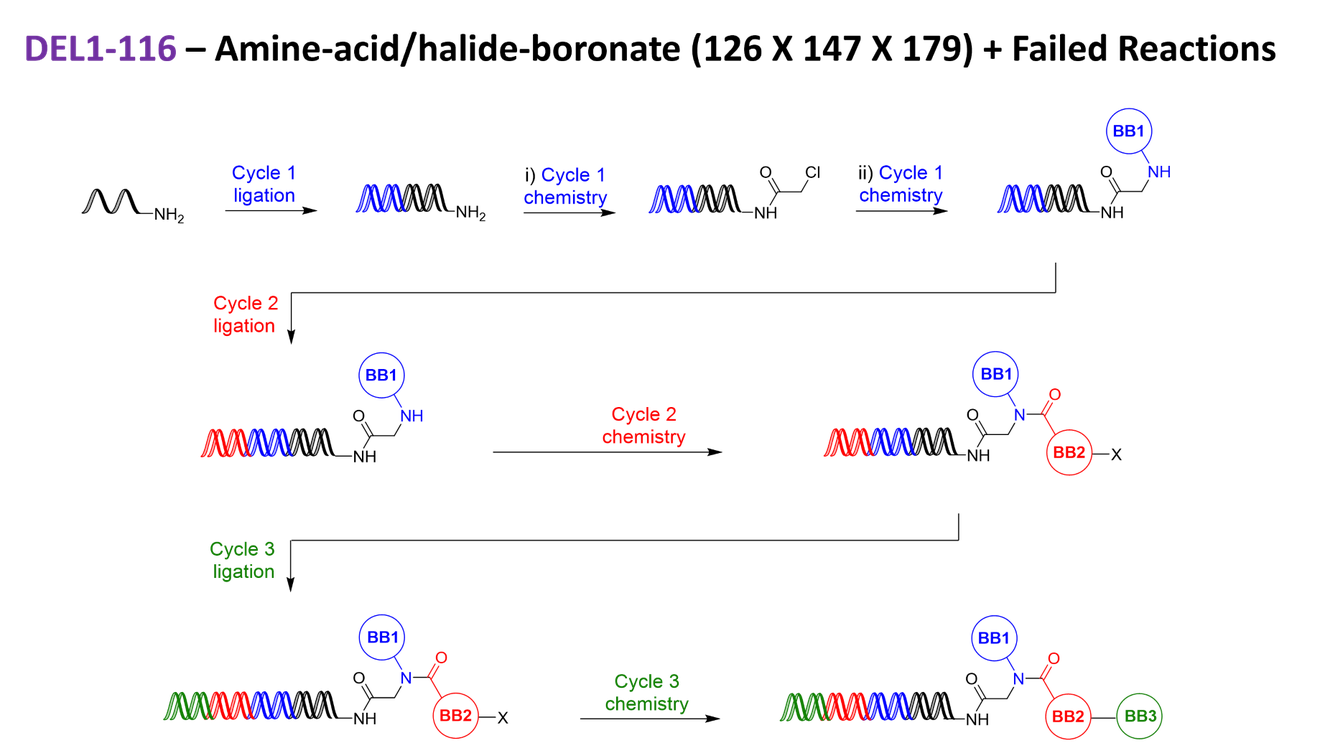
DEL116 was constructed by three consecutive cycles of ligation and chemistry. Cycle 1 chemistry is made up of two steps: i) amide coupling of chloroacetic acid with amino group linked to hexaT headpiece, and ii) nucleophilic displacement of chloride by primary amines. The chloroacetamide acts as an appendage common to all library members to link cycle 1 and cycle 2 building blocks in a branched connectivity. The resulting secondary amine then goes through an amide coupling reaction in cycle 2 chemistry with halogenated aromatic carboxylic acids. Cycle 3 chemistry entails a Suzuki cross-coupling between the halogenated aromatic moiety and mono-functional boronic acids or esters.
On-DNA validation of building blocks was carried out to choose them based on a range of criteria including product conversion, side product conversion, purification and resulting size and diversity of final library. The final collection of building blocks used to synthesise DEL116 included 126 primary amines, 147 halogenated aromatic carboxylic acids and 155 boronic acids and esters.
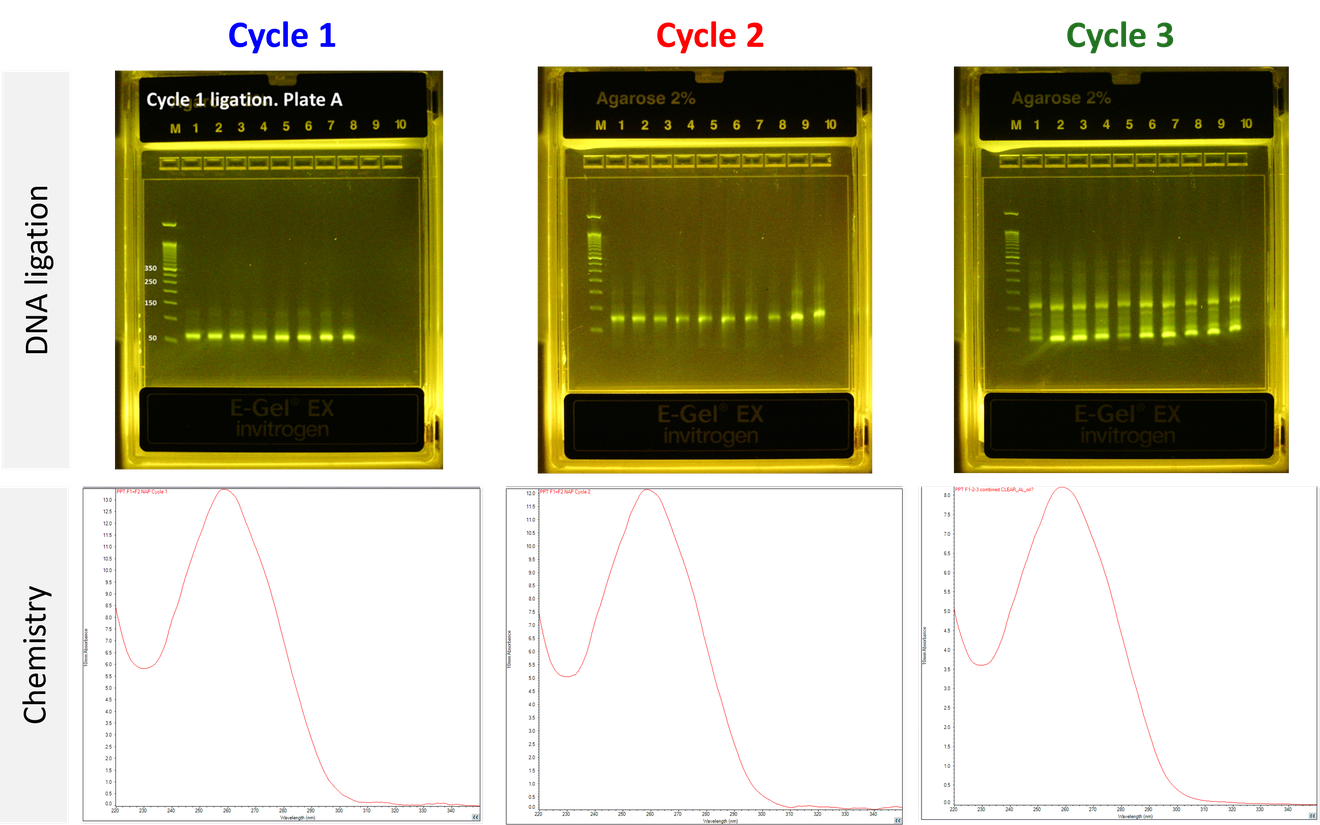
Each step of ligation and chemistry are followed by purification steps in all cycles. After ligation completion is confirmed by gel, the DNA was precipitated in the plates, supernatant removed and resulting pellets dried under vacuum. After each chemistry step, all reaction mixtures were pooled in a PCR tube, the resulting mixture washed with organic solvents and the resulting aqueous layer purified by size-exclusion chromatography (NAP columns). Fractions were combined based on Nanodrop DNA purity ratios and precipitated in ethanol. The collected DNA pellets were then re-dissolved in water and analysed by Nanodrop.
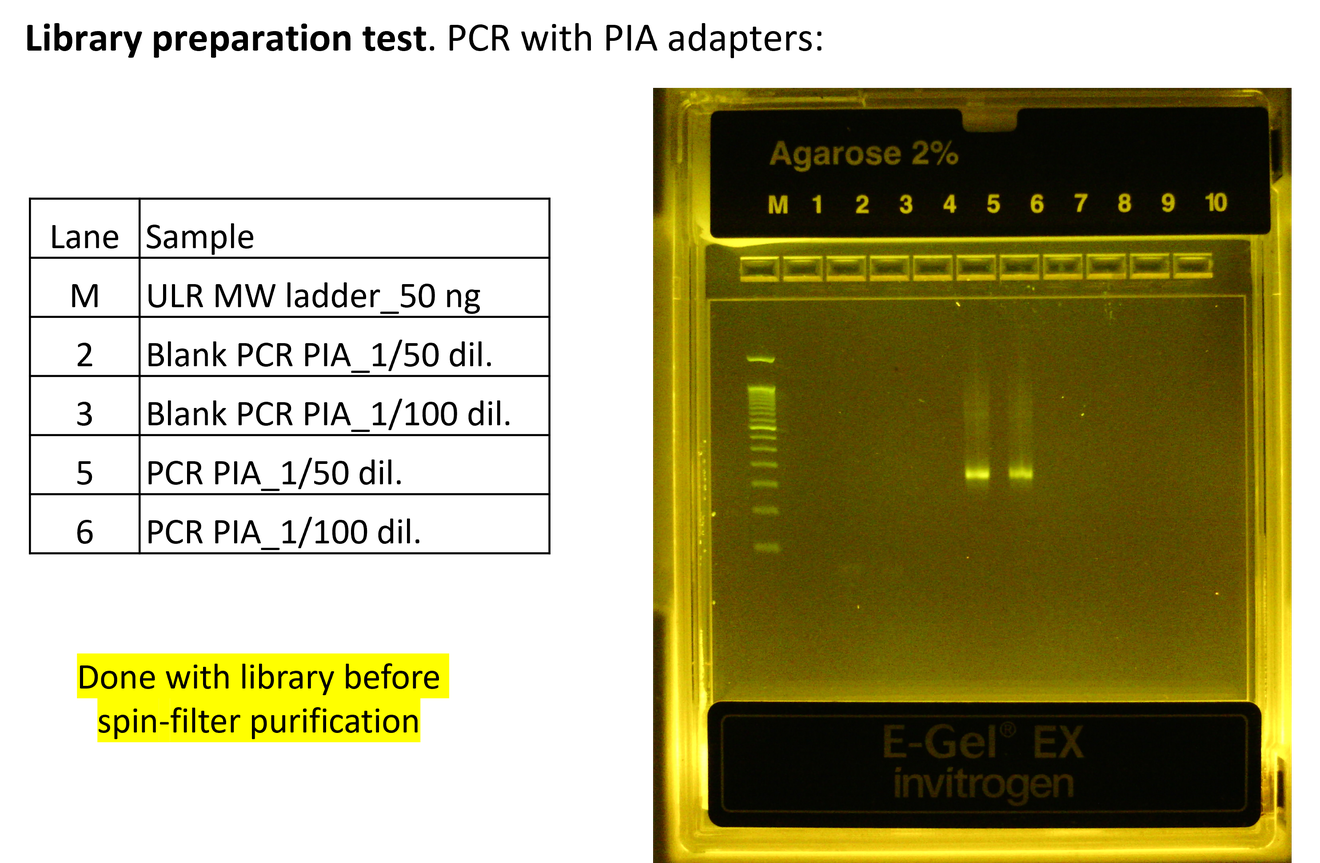
To confirm the library contains the right double stranded DNA construction to allow for the identification of compounds through sequencing, we perform a PCR experiment using sequencing adapters containing primers that are only complementary to the primers at the end of both DNA strands of library members.
We also perform qPCR to determine how many copies of the library we have before and after selection.
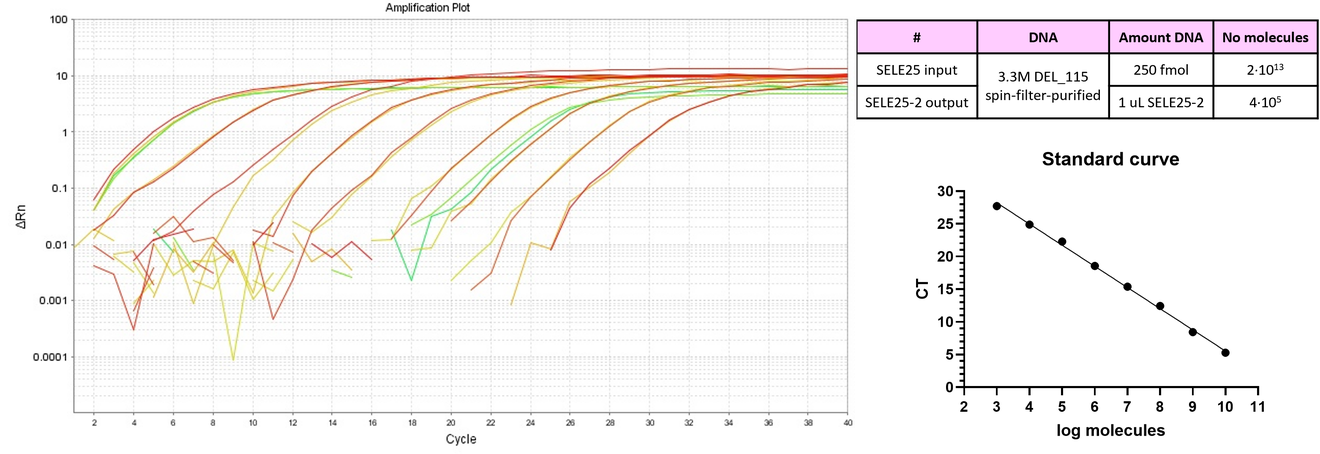
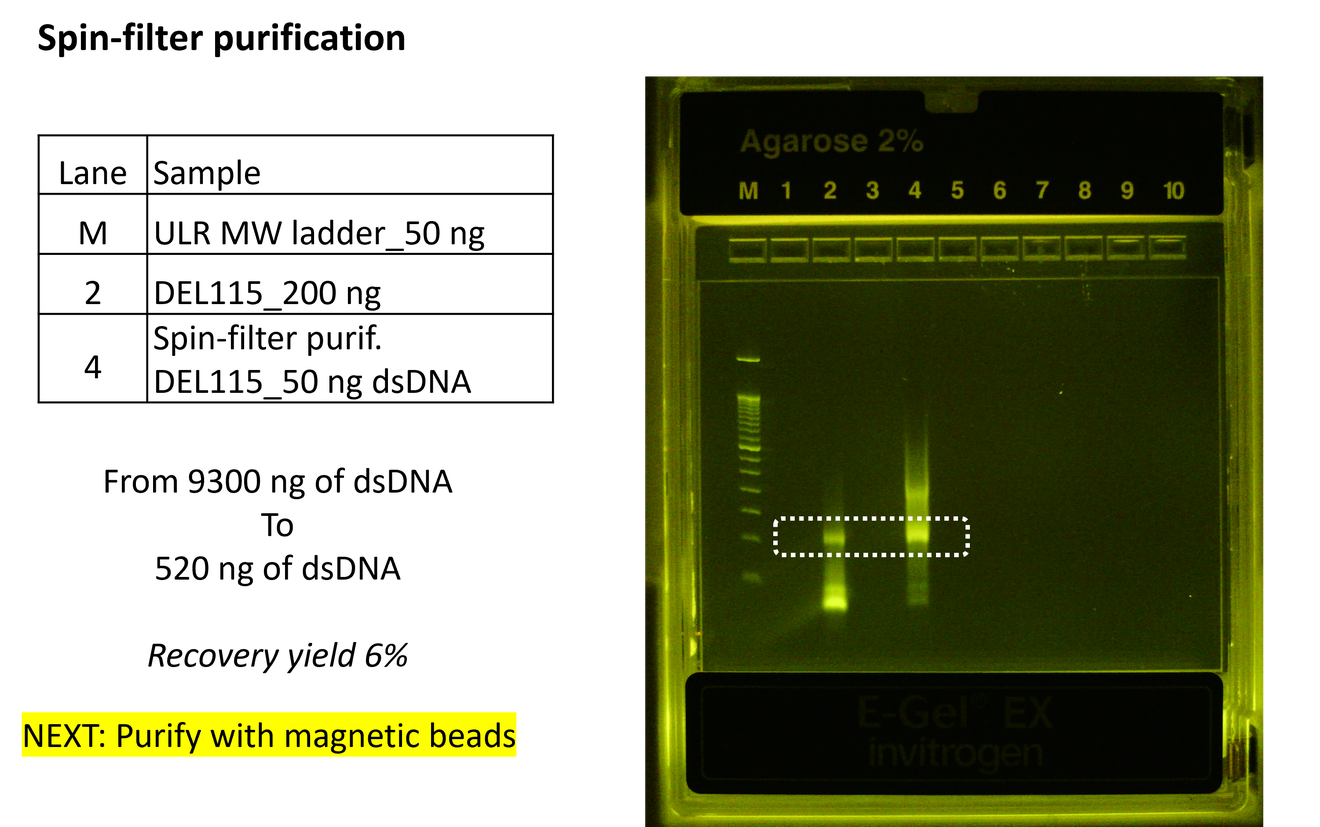
After an experiment to test how appropriate a DEL is to run selections just after purification with NAP column and DNA precipitation vs. further purification with spin-filter column, we concluded that additional purification steps must be taken to ensure better selection results.